The oil spring
The Seneca kept a one-mile-square tract here, the Oil Spring Reservation. Its 'dirty pool, 20 feet in diameter' was famous for Seneca Oil, which people once believed could cure skin diseases (Child, quoting French's gazetteer). The Franciscan Joseph de La Roche Daillon described the spring in 1627. In 1927 the state's oil producers put up a monument there.
A reservoir for a canal
To feed the summit level of the Genesee Valley Canal, the state built a 60-foot dam on Oil Creek. Child says the resulting pond covered about 500 acres. That's today's Cuba Lake.
Cheese capital
Beginning in the 1870s, Cuba's railroads and canal tied it to New York City markets, and the town helped set cheese prices nationally. The Cuba Cheese Shoppe opened in 1975, and it's still at the site of the original plant on Genesee Street.
People
Charles Ingalls, father of Laura Ingalls Wilder, is among Cuba's notable people. So are Western Union president William Orton and Charley Ackerly, a 1920 Olympic wrestling champion born in Cuba.
From the 1879 county history
Read the page-cited Cuba chapter selection →
- Cuba was formerly township 3, range 2, of the Holland Purchase and was organized from Friendship under the name "Oil Creek."
- In 1879 the recently abandoned Genesee Valley Canal still crossed the town, and the railroad had two stations there, Cuba and Cuba Summit.
- Dairying was the leading farm industry. In 1879 the town had five cheese factories, which took the milk of about 2,150 cows.
- Early settlers' houses were all of logs. Stephen Cady and Jacob Baldwin settled at North Cuba (now Seymour) about 1821 or 1822 and built the town's first grist-mill.
“All of the houses in which the aforementioned settlers lived were of logs, and about none of them was there a clearing of more than a few acres in extent.”
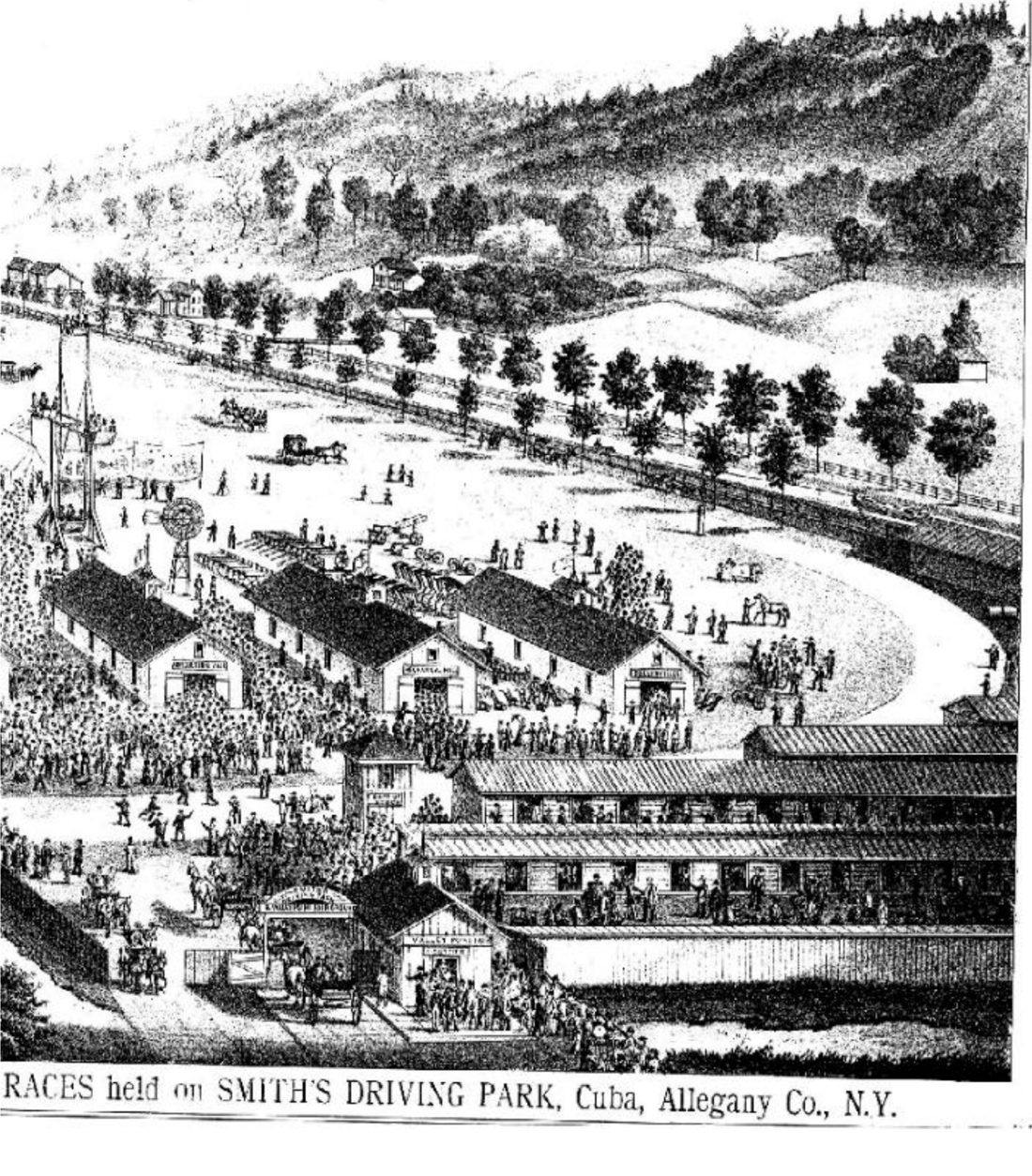
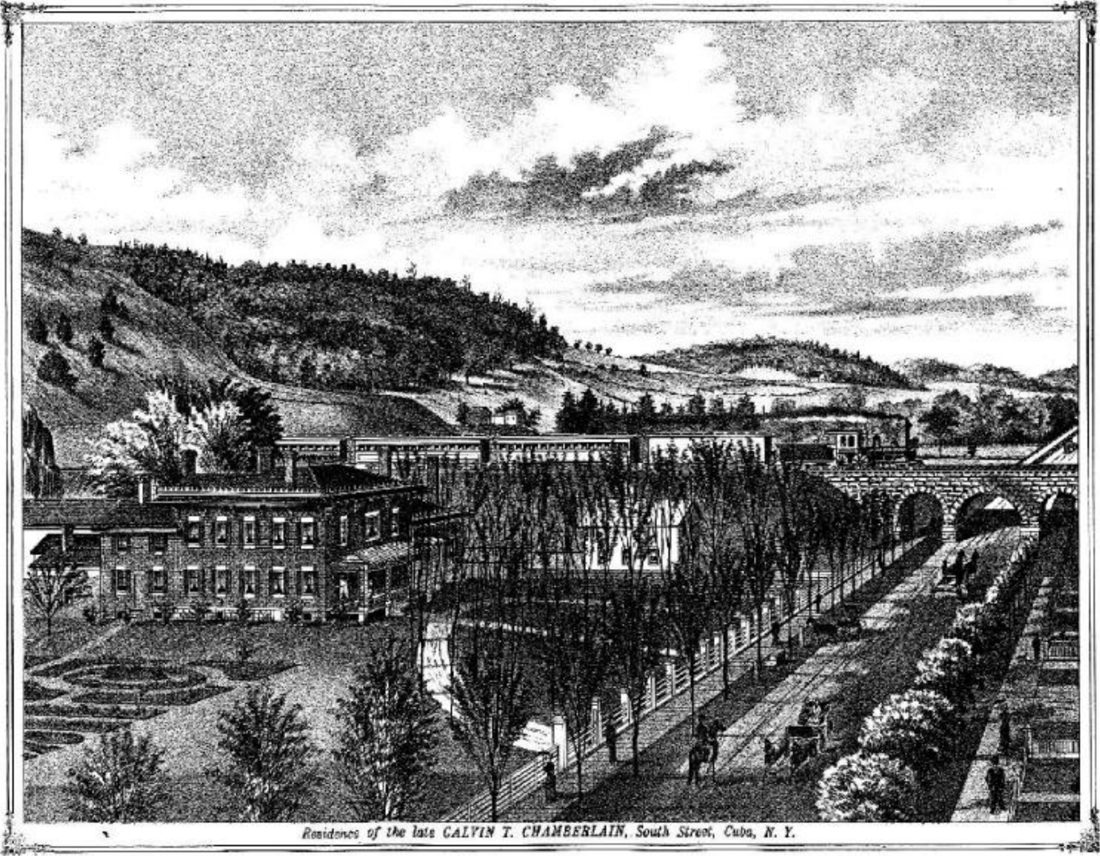
Then & now
Cuba Lake is the old canal reservoir, and the Main Street and South Street historic districts are on the National Register.