The Pigeon Woods
Long before the village, the Seneca came here to harvest passenger pigeons, according to the memoirs of Capt. Horatio Jones. A 1771 map labels the spot Gistaquat.
Captain Dyke
In 1795 Nathaniel Dyke, a Yale man who had served on the staffs of Gen. Warren and Gen. Washington, came up from Tioga Point. He had grist and sawmills running on Dyke Creek by 1803. The first birth in town was Rachel Dyke's, in 1805.
Who's Wells?
Gardiner Wells owned the land that became downtown. Local history says he was the one person who didn't show up to the naming meeting. In 1871 the Legislature renamed the town Genesee, then gave back the name Wellsville on June 8, 1873.
Oil town
Tanneries and lumber came first, and the Erie arrived in 1851. Taylor's Triangle well in 1879 made Wellsville the oil country's 'base of supplies,' as Minard put it. Later, secondary recovery by Bradley Producing and the Sinclair refinery kept it going until the refinery closed in 1957.
Hometown names
Wellsville's notable people include western-film sidekick George 'Gabby' Hayes, 1925 Kentucky Derby–winning trainer William B. Duke, broadcaster Billy Packer, and Yankees announcer John Sterling, who started at WLSV.
From the 1879 county history
Read the page-cited Wellsville chapter selection →
- Wellsville was formed from Scio, Andover and Willing on November 22, 1855.
- The book names Nathaniel Dyke, a Yale graduate from Connecticut, as the first white settler. It says he served on the staffs of Generals Joseph Warren and George Washington, and that he came from Tioga Point in the spring of 1795 to settle on Dyke's Creek.
- William Foster and his son Asa, from Onondaga County, were the first settlers near Stannard's Corners.
“His education and military experience well fitted him to become the pioneer settler.”
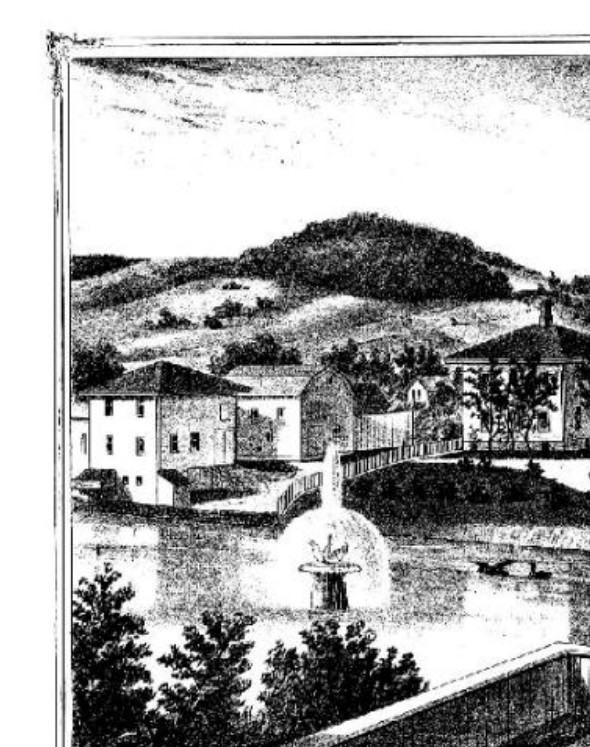
Then & now
The refinery is gone, but Main Street, the Genesee River and Dyke Creek's mills mark the old story. Dyke is buried in Elm Valley.